Mithraism

Dating of the various texts in relation to other sources, archaeology, geology, genetics etc.
Post Reply
Er Aldaric
Posts: 49
Joined: 21 Jan 2023, 17:42

Mithraism

Post by Er Aldaric »

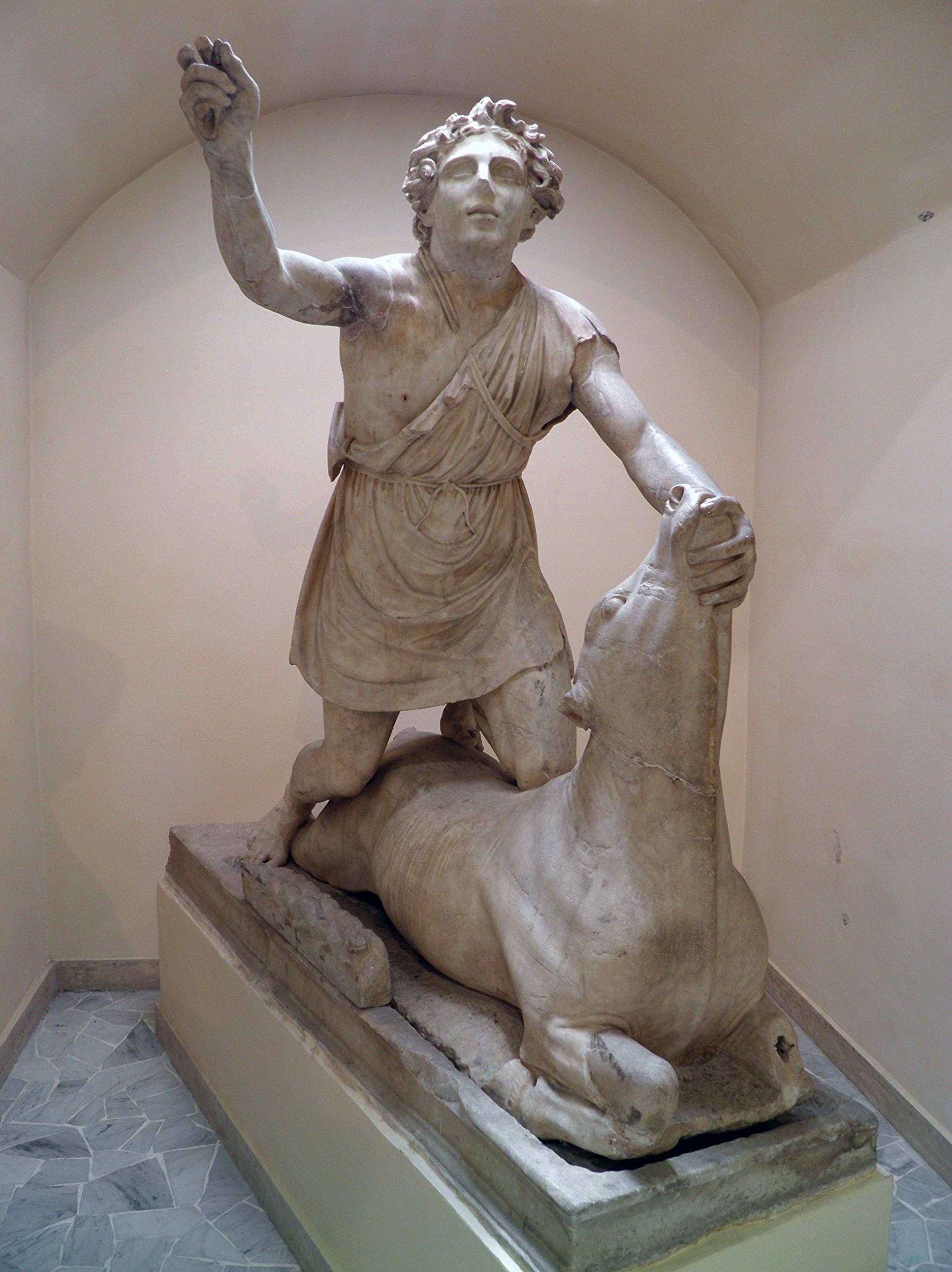
Has anyone else taken notice to the insistence ancient artisans had in depicting Mithra as a (blond) Phrygian / Frisian capped youth? Mithraism was essentially an astrological religious sect, astrology was a dominant belief over the course of the Frya's civilization (I find the iconography of the Tauroctony similar to the depiction of Kroder standing on Pisces), and within the religion slaves in the outside world weren't recognized as slaves within the mithraeum and had equal dignity among the other members. Oathkeeping, justice, law, contract keeping, and militantism are attributes of both Frya values and Mithraism. There is an association between Mithra, the North Star, and the swastika. All of these are simply things I have noticed, I have no hard evidence of anything but part of me thinks that Mithraism might have developed as a response to the fall of mainstream Frya religion, or something along those lines. I believe (assuming chronology revision) the formation of the cult of Mithras would at least in part fall outside the time covered by the OL. Any thoughts on Mithraism and where it fits into this new chronology are welcome.

"A young Saxman rode a wild Auroch that he had caught and tamed" 13c.
Image
User avatar
Nordic
Posts: 231
Joined: 31 Dec 2022, 11:08

Re: Mithraism

Post by Nordic »

The bull-slaying motif is attested from Finnish poetry, translated as The Great Ox. It typically includes a supernaturally large ox, which is depicted in astronomical terms: a squirrel runs a month along its horns i.e. new moon horns - see Ratatoskr. The main god-heroes are trying to kill it, comically ending up thrown all-around by the ox, who doesn't go without a fight. Finally the heroes slay the ox, ending up in huge amounts of usable meat, blood and fat. The number of goods is peculiar and may be again an astronomical riddle ie. listed days of some cycle (10076 days in example below).

The online SKVR database of archaic Finnish folk songs lists 20 known variants. Here is a brief variant collected by Kristfrid Ganander (bio), translated in Matti Kuusi, Keith Bosley, Michael Branch, Finnish folk poetry (1977), p. 268.
TheGreatOx.png
TheGreatOx.png (609.03 KiB) Viewed 11 times
User avatar
Nordic
Posts: 231
Joined: 31 Dec 2022, 11:08

Re: Mithraism

Post by Nordic »

If the bull is assumed to stand for the age of Taurus, that ended in c. 2200 BC, one could look OL-wise at this peculiar Danish Odin or Wodin story (Gesta Danorum 1.7.2):
When he [Odin] had retired, one Mit-othin, who was famous for his juggling tricks, was likewise quickened, as though by inspiration from on high, to seize the opportunity of feigning to be a god; and, wrapping the minds of the barbarians in fresh darkness, he led them by the renown of his jugglings to pay holy observance to his name. He said that the wrath of the gods could never be appeased nor the outrage to their deity expiated by mixed and indiscriminate sacrifices, and therefore forbade that prayers for this end should be put up without distinction, appointing to each of those above his especial drink-offering. But when Odin was returning, he cast away all help of jugglings, went to Finland to hide himself, and was there attacked and slain by the inhabitants. Even in his death his abominations were made manifest, for those who came nigh his barrow were cut off by a kind of sudden death; and after his end, he spread such pestilence that he seemed almost to leave a filthier record in his death than in his life: it was as though he would extort from the guilty a punishment for his slaughter. The inhabitants, being in this trouble, took the body out of the mound, beheaded it, and impaled it through the breast with a sharp stake; and herein that people found relief. (source)

Cuius secessu Mithothyn quidam praestigiis celeber, perinde ac caelesti beneficio vegetatus, occasionem et ipse fingendae divinitatis arripuit barbarasque mentes novis erroris tenebris circumfusas praestigiarum fama ad caerimonias suo nomini persolvendas adduxit. Hic deorum iram aut numinum violationem confusis permixtisque sacrificiis expiari negabat ideoque iis vota communiter nuncupari prohibebat, discreta superum cuique libamenta constituens. Qui cum Othino redeunte, relicta praestigiarum ope, latendi gratia Pheoniam accessisset, concursu incolarum occiditur. Cuius exstincti quoque flagitia patuere, siquidem busto suo propinquantes repentino mortis genere consumebat tantasque post fata pestes edidit, ut paene taetriora mortis quam vitae monumenta dedisse videretur, perinde ac necis suae poenas a noxiis exacturus. Quo malo offusi incolae egestum tumulo corpus capite spoliant, acuto pectus stipite transfigentes; id genti remedio fuit. (source)
The name Mit-othin may mean "Middle-Odin" (link). The same core story was known in antiquity as a story of Zoroastrian royal Bardiya (link), in whose story the role of Mit-othin was taken "was impersonated by a magus called Gaumata" ie. Gautama. The Buddhist name refers to oxes and is attested from Zoroastrian sources as well (link).

The medieval Danish account above bears a textual relation to Oera Linda book. Just as the OL story of Wodin's war against Finns begins, it previously notes that Finns were stopped in Gothenburg in southern Sweden. The above Mit-othin-in-Finland episode is preceded in Gesta Danorum 1.6.11 by note of an Easterner (Orientalium) attack and the battle fought in Gotland (Gutlandiam). In medieval Scandinavian parliance an Easterner refers to Finns and an Eastland to Finland (link). Hence the follow-up question if Danish Saxo actually relates an older version of the story than the Persian Magus one (as told by Greeks); if one type of Magus was textually exchanged for another; if Odin (Latin form Othino) was substituted by one Otanes; and if the corrupted name of the Persian account (Gautama>Gaumata) retains etymologally the original context of age of Taurus at c. 2200 BC.
Post Reply